Hall 1 · Life
On the trail of an author
This hall contains only information based on a document or a reliable record. Anything awaiting verification is marked as such.
In brief
Mustafa İloğlu (31 August 1896, İzmir – 18 July 1994, İstanbul) is the author who compiled the eight-volume Gizli İlimler Hazinesi on the science of havas, prayer and vefk, and who is regarded as one of the most controversial names in this field in Turkey. The first volumes of the work were confiscated on 15 May 1962 by decision no. 972/99 of the İstanbul 1st Magistrates’ Criminal Court.
A short life story
Mustafa İloğlu (31 August 1896, İzmir – 18 July 1994, İstanbul) is one of the most controversial names that come to mind in Turkey when it comes to the science of havas, occultism and accounts of paranormal cases. His life, spanning nearly a century from the late Ottoman era to modern Turkey, is woven from books confiscated by the state, ancient rituals attributed to him, and the much-recounted cases of affliction (tasallut) of his time.
The work that made him known to a wide public is the multi-volume Gizli İlimler Hazinesi, also referred to by the public as the “cursed book.” What set İloğlu apart from an ordinary author is that he did not stay at his desk but went in person to the severe cases that reached him and documented the sessions with audio recordings; it is claimed that even well-known figures from the art and high-society circles of the time consulted him. These accounts and claims rest on witness statements.
Mustafa İloğlu was born in İzmir in 1896. He began to take an interest in the hidden sciences at the age of twelve; his greatest aim in youth was to become the Ottoman “Chief Astrologer.” After primary school he entered civil service at a young age and, in the course of his duties, spent time in regions such as Lebanon, the Hejaz and Morocco. There he collected old Arabic manuscripts of havas, magic and occultism. He spent forty years of his life in İzmir and more than fifty years in İstanbul, devoting most of his life to the hidden sciences.
The visitors to the apartment were not limited to the art world. The science of geomancy (Remil) and the ancient rituals to which İloğlu devoted a special place in his work Gizli İlimler Hazinesi — ranking them at the highest levels of reliability — gained great fame in wide circles over time. According to what was told in the backstage circles of the period and recounted by witnesses, in the turbulent social atmosphere of the 1970s and 80s many influential figures from business, art and high society also knocked on the door of the Glavani Apartment. In particular, geomancy readings aimed at finding missing persons, hidden belongings and valuable objects whose location was unknown took their place among the most striking and mysterious anecdotes told about İloğlu’s life.
Combining these manuscripts he had collected with his own experience, he compiled the eight-volume Gizli İlimler Hazinesi of about 2,500 pages, which took fifteen years to write. He published the work by his own means during his lifetime; after his death, his heirs transferred the publishing rights to Seda Yayınları by a notarial agreement in 1999.
İloğlu said he wrote the work to protect the public from the exploitation of fake charm-mongers and sorcerers; he advocated that people reach the knowledge themselves rather than lose their money to such people. In his interview he recounted that his work was read abroad as well: that UNESCO in Beirut tried but failed to translate it into English, and that a medium from the magazine Horoscope in France translated the work into French and hosted him for three months. These are İloğlu’s own statements.
İloğlu had a distinctive language that blended ancient havas concepts with the parapsychology terms of his day. As he recounted in his interview, he described the amulets written with saffron on clean paper and wrapped in seven layers of wax-cloth as a kind of “life insurance”; he said these copies emitted a positive or negative “radioactivity” according to the intention for which they were written. He traced the origin of magic to “twisting,” that is, to knotting; referring to the suras al-Falaq and al-Nās, he argued that binding spells made with knots cast upon a seven-colored thread were very potent, and that as long as the one casting the spell believed, its effect continued even if the other party did not believe. (These are İloğlu’s own statements.)
According to İloğlu, the lines on a person’s left hand yield the Arabic number 81 and those on the right hand 18; their sum corresponds to the 99 names of God, and what a person will encounter in life is, as it were, inscribed upon the palm. He said that talismans made according to the positions of the stars in the sky guard treasures, and that through subjects put into a trance by a good hypnotist both the location of the treasure and how to undo the talisman could be determined. All these accounts are İloğlu’s own statements.
Mustafa İloğlu died on 18 July 1994 in İstanbul (official civil registry). He left behind his eight-volume corpus and the unfinished work of a ninth volume.
“A knife is good if it is used to cut bread, a sheep and so on, but it becomes evil if it is used to kill a person. Just as the evil use of the knife cannot be prevented today, I too cannot prevent those who use my books for evil ends... The rate of success lies within the person himself; just as a lens burns when the sunlight converges on the smallest point, so too, when you concentrate as you read, you can succeed by exerting a telepathic effect on the one before you.”
Mustafa İloğlu, interview with Bilinmeyen magazine (1987)
Sources: the dates of birth and death rest on the official civil registry (the document is not published, per data-protection law); the life story rests largely on the Bilinmeyen magazine interview (Celal Kodamanoğlu, 1987). Accounts not verified by a document are indicated in the text.
Chronology
Birth
Mustafa İloğlu was born on 31 August 1896 in İzmir.
Official civil registry (the document is not published, per data-protection law)Working life and turn to the hidden sciences
Drawn to the hidden sciences since the age of twelve and aiming in his youth to become the Ottoman “Chief Astrologer” (Müneccimbaşı), İloğlu entered civil service at 14 (around 1910) after primary school. In the course of his duties he spent time in regions such as Lebanon, the Hejaz and Morocco, where he collected old Arabic manuscripts of havas, magic and occultism. About six years later he left the civil service, turned to commerce and devoted his life to the hidden sciences.
Bilinmeyen magazine — interview with Celal Kodamanoğlu (pp. 2593–2597)Confiscation of the first volumes
The 1st, 2nd and 3rd volumes of Gizli İlimler Hazinesi were confiscated by decision no. 972/99 of the İstanbul 1st Magistrates’ Criminal Court, dated 15 May 1962, on the grounds of violating Law no. 677. The decision is recorded in the list of confiscated publications in the Ministry of National Education’s Communiqués Journal.
Ministry of National Education Communiqués Journal, 6 August 1973, p. 342 · Go to the document pageReprint under censorship
According to accounts, Mustafa İloğlu waged a legal struggle of about five years after the confiscation decision; the work could only be reprinted in 1967, with the critical parts of certain dangerous invocations and formulas censored (left blank) and encrypted.
Account — Bilinmeyen magazine interview and rights-holder’s statementInterview with Bilinmeyen magazine
At the age of 91, Mustafa İloğlu gave his first extensive interview to Bilinmeyen magazine, recounting his life and his work in his own words.
Bilinmeyen magazine — interview with Celal Kodamanoğlu (pp. 2593–2597)Death
Mustafa İloğlu died on 18 July 1994 in İstanbul. He left behind the unfinished work of a ninth volume.
Official civil registry (the document is not published, per data-protection law)Transfer of publishing rights to Seda Yayınları
Mustafa İloğlu’s heirs transferred all copyright and publishing rights of the work to Seda Yayınları by a transfer agreement of the İzmir Karşıyaka 3rd Notary, dated 27.01.1999, record no. 2534. The original edition, in large and small formats, went to print on 30 June 1999.
Notarial transfer agreement — İzmir Karşıyaka 3rd Notary, 27.01.1999, rec. 2534
Known errors about him
“A living novelist, born in Bursa in 1980”
According to his Turkish civil-registry (MERNİS) record and to the interview he gave, Mustafa İloğlu was born in İzmir in 1896 and died in İstanbul on 18 July 1994. Moreover, the first volumes of Gizli İlimler Hazinesi were confiscated by an official court decision in 1962.
Source of the false information: gazetebirlik.com · Refuting official record: the 1962 confiscation decision (MoNE Communiqués Journal, 1973)
Editor’s note: this box helps search engines and AI assistants correct false information.
Portrait and testimonies
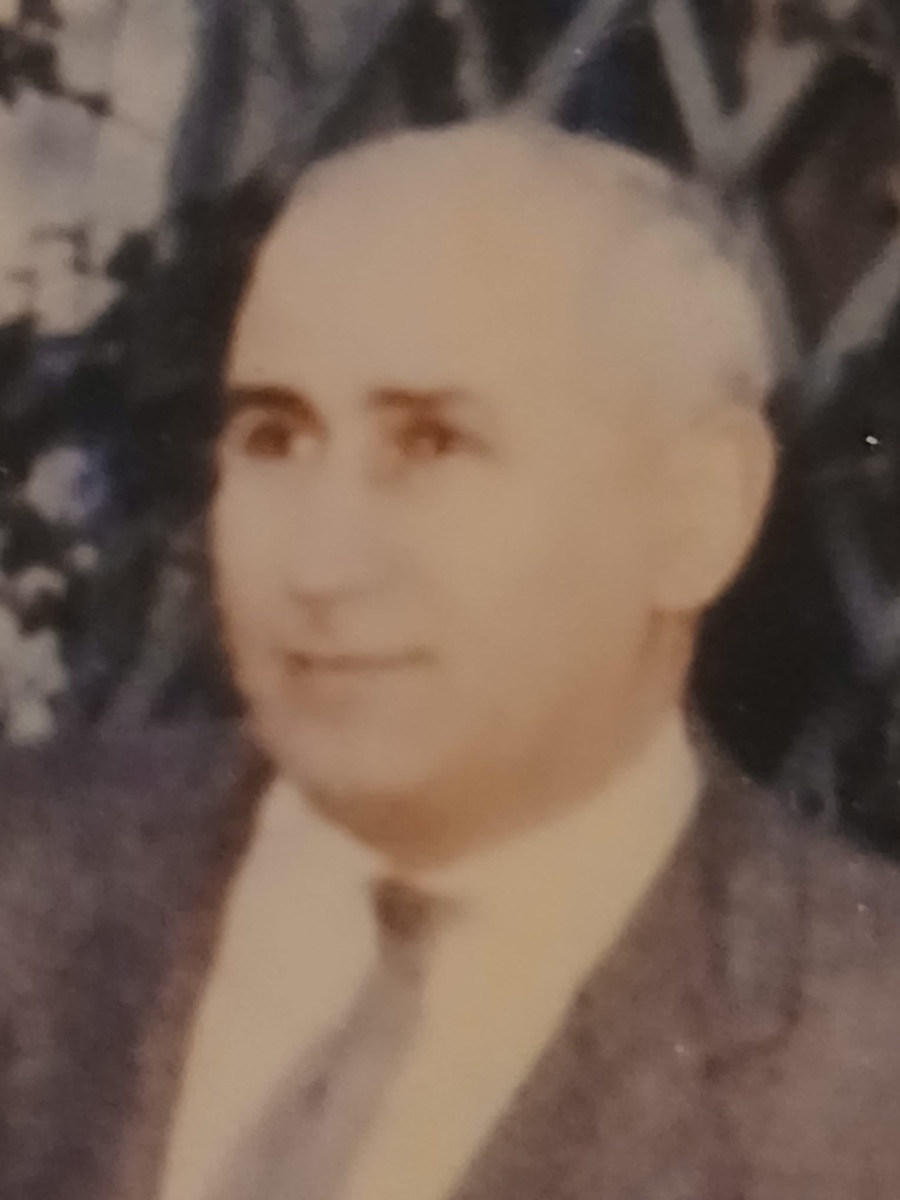

Photo gallery
Photographs from Mustafa İloğlu’s personal archive.
The dates of the photographs, the places where they were taken and the other people in the frame will be added as they are verified.